Smooth Travel Systems

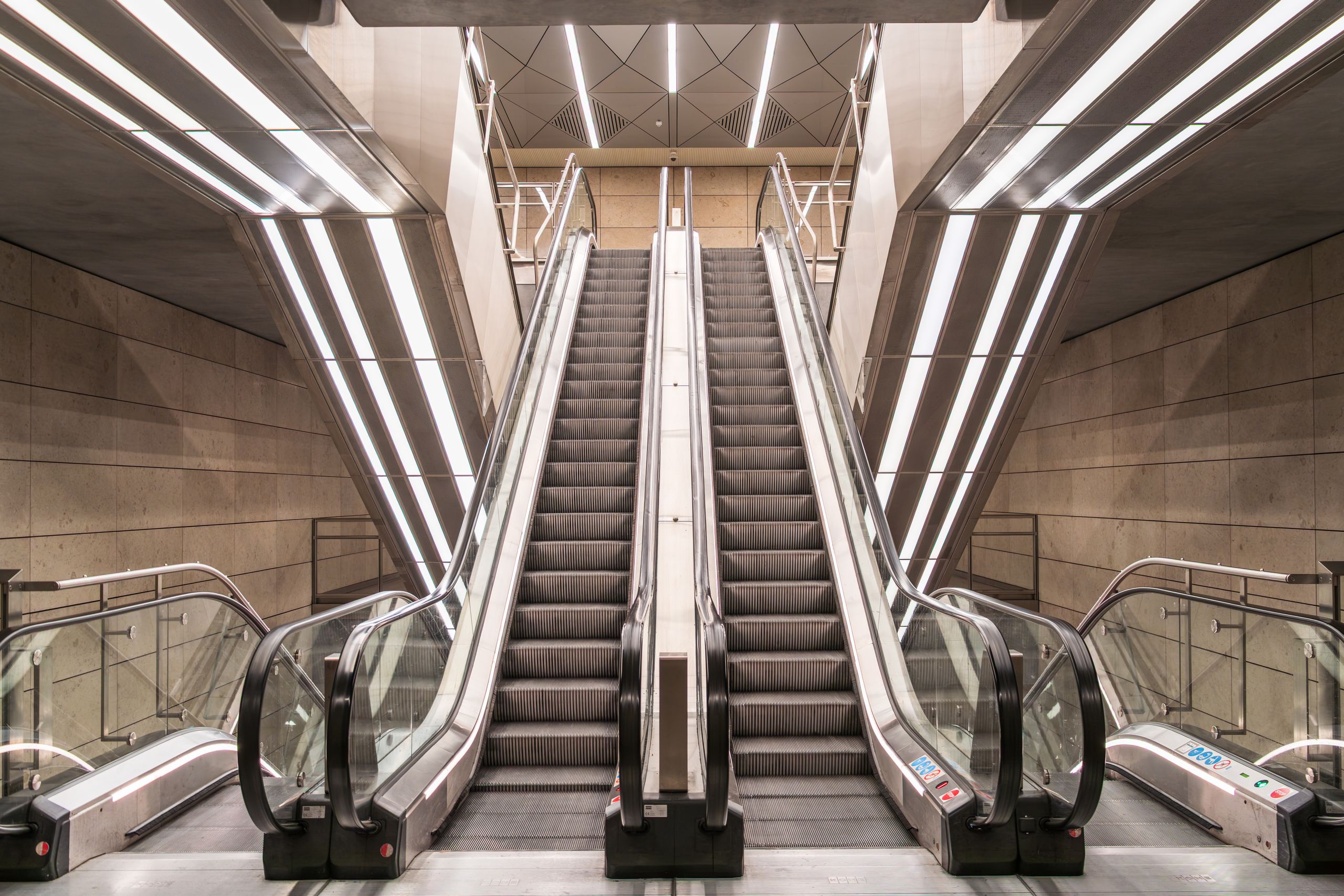
You might find this completely unsurprising, but the Copenhagen Metro system may be the smoothest and most efficient I’ve travelled on all year. Whether that speaks most to the Metro design, the people, or the streamlined societal system in general is less clear.
Two major points of difference. Seamless entry and exit. Scheduling.
In Denmark, there is no tapping on and off. No physical tickets (or at least, they’re being phased out). No barriers. Nothing prevents you from walking on the train and taking a seat. This has several downstream effects. Less station congestion. More accessible and useful points of entry and exit from the street. Minimal station staffing. Less delays. It works extremely well. I’m sure the notion isn’t unique to Denmark, but it is the most effectively I’ve seen it implemented thus far.
Of course, you can’t entirely rely on trust. That would make the entire operation financially unviable. So, they must check tickets. But, anecdotally at least, I found that the balance in checking tickets was just right. A penalty high enough to dissuade you from fare dodging, plus frequent-enough surveillance to make getting away with it doubtful. Sure, there is a small friction in purchasing zone tickets through a Danish app when you’re a first-timer, but you quickly get the hang of it. Besides, it would be near-impossible to find a ticketing method that isn’t difficult for foreign newbies to understand.
The second part that was incredible: all Metro lines arrived every three minutes, every single hour of the day. Of course, the frequency is great. I think that simplicity is the key there. Only four lines exist I believe. They’re short and each serve a very specific purpose. They’ve essentially decided to double down on a strong system, rather than attempting to expand it. Having 24hr service continue as usual is uncommon from my experience. Tokyo didn’t have it. Neither has anywhere else in Europe so far I’ve seen. Given we arrived so late from the airport, it was acutely useful to us.
All this is to say—I enjoyed the Danish Metro thoroughly. I wasn’t performing complex calculations whilst on the platform, or trying to remember the names of five different transfer lines, stations, and rail companies. It was straightforward. Not revolutionary, but simple and effective. Granted, it wasn’t cheap, but what is in Copenhagen?