Fushimi Inari: Best Enjoyed at Sunrise

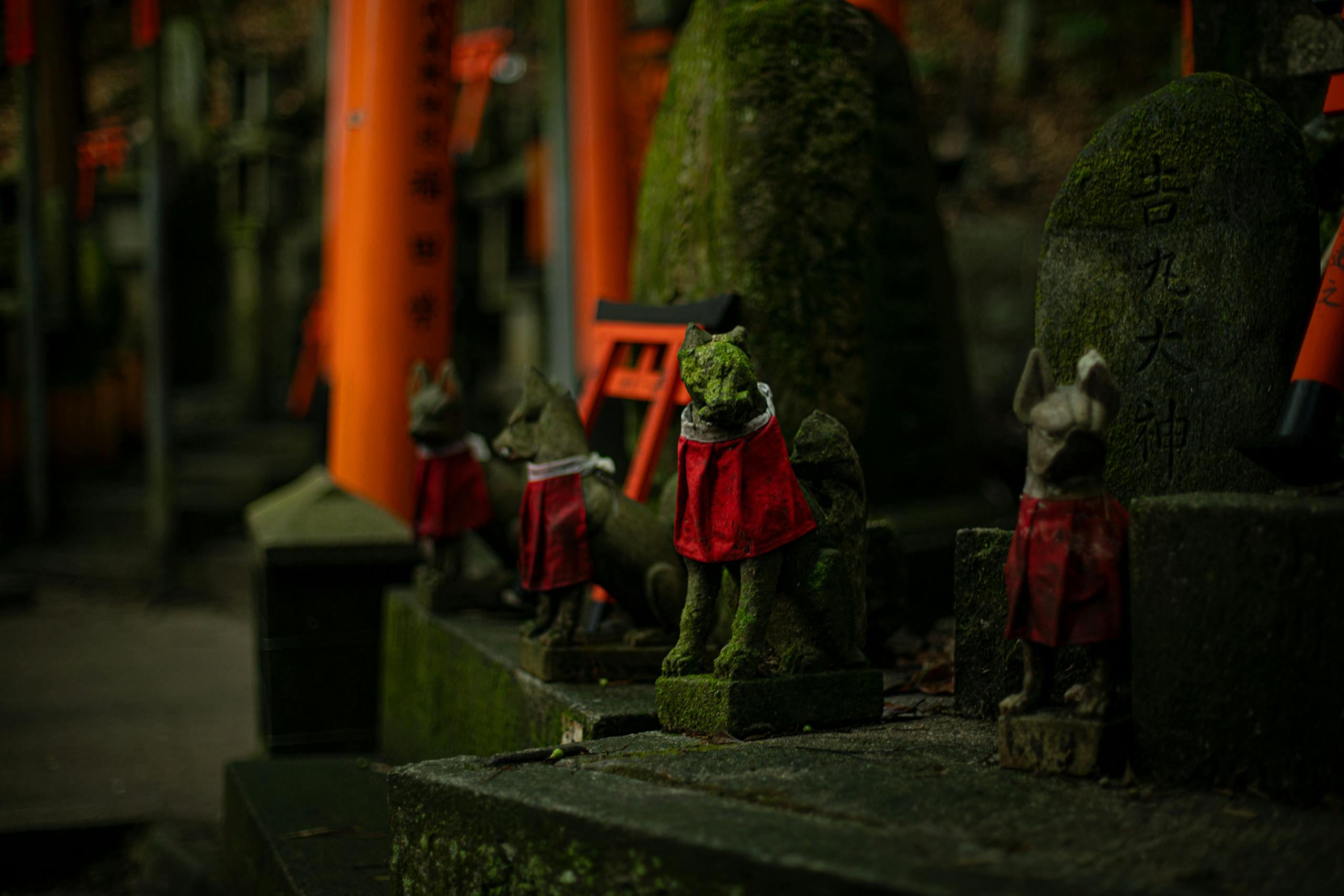
Foxes. Moss. Bamboo. Saliva tastes like the freshest spring water, slightly chilled. Signs say please do not smoke outside; enjoy the mountain air instead. Cats slink along beside you next to random little huts dotted throughout the mountain, becoming more frequent near the summit. Of course, a delightful shade of red surrounds you always.
You exit the sacred place and arrive in suburbia. The tangible and the real coalesces with the spiritual. It fades out gradually, but the essence of Mt. Inari permeates everything here. A simple house, then a shrine. Next, a golden Buddha statue? More houses. Cars parked into the tightest spaces. Signs written in English pleading with you to not sit on someone’s front gate while you drink your canned coffee from the vending machine within arms reach. In an allusion to Craig Mod, things become other things everywhere in Japan. The past morphs into the present, and seamlessly once again, into the future, without the jagged edges. In one instant, you step off the subway. The next, you step onto a sacred mountain trail.
There is a lingering feeling of trespassing. You sense that each shrine is a deeply personal space—now, not just a relic of the past. Many of the torii gates are quite new. I get the sense that Inari evolves fluidly. Tourists are spectators to it all.
An woman tends to her shrine. Burning incense. Laying flowers. Walking so quickly past feels disrespectful, as though I’m not taking it all in enough. I slow my pace and steal a glance, a curious one. But I’m conscious not to stare. I don’t understand the symbolism, but it feels like meaningful, private ritual, carried out in an overtly public space. Yet, many local Japanese also use the famous hike—lined by the red torii gates—as a running trail. I don’t feel as bad. I want to treat the place with reverence, but I’m too culturally unaware to know how best to.
As we descend, the smell of yakitori food stands wafts across the street. The once-dormant stalls that we passed before dawn are now alive. Bustling. Preparing for the onslaught of tourists already here, and the many more to come.
We duck into a small cafe, run by two elderly ladies, making traditional siphon coffee. We sit at the bar and just watch them go about their work. Making siphon coffee looks like a fun science experiment you might do in a school lab. Heating a circular flask over a flame. The steams causes the coffee grounds to erupt like a volcano and then gently fall back down, before the black nectar is then siphoned back into the flask. The result? Strong, smooth, hot coffee. Good.
The droves of flag-bearing tour guides, flanked by phone-waving disciples pass us in the opposite directly. They’re hoping to catch an early glimpse of the shrine. It’s only 8am. I feel incredibly grateful that we were here before sunrise. Were we alone? No. But nature felt undisturbed. Time felt dilated. I really did feel magic that Fushimi Inari is renowned for. But I fear I wouldn’t have if we arrived an hour later.