Trying to Understand Buffets

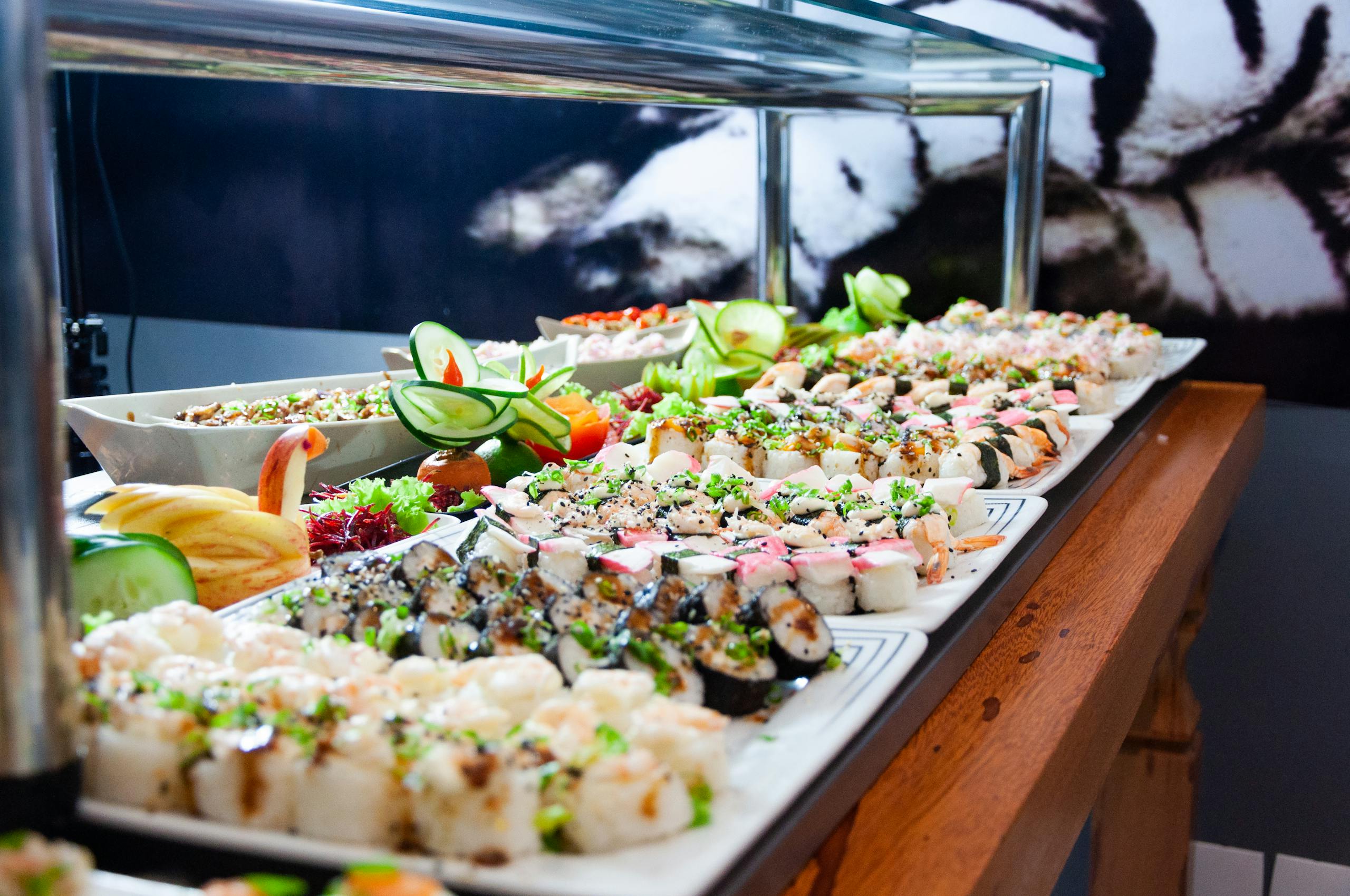
I don’t understand the concept of a buffet. On several levels.
Taking a big-picture lens, food waste is the most obvious concern. The buffet idea embodies the notion of first-world privilege in my eyes. With a buffet, waste is unavoidable I feel, because if a restaurant makes less food than they think people will eat, suddenly the notion of “all you can eat” is thrown out the window. That makes waste a guaranteed by-product of any buffet.
If waste is an assumption, we then should look at how the waste can be dealt with. There are definitely positive strategies employed sometimes here. Donating to food banks, feeding employees, or even repurposing the waste as biofuel are interesting options. But these solutions are much nicer in theory than practice. Between food safety concerns, varying legislation, and business interests, waste often is exactly that—wasted. Sustainable and impactful waste management requires real organisation, effective systems, and sometimes additional expense. Just taking out the bins is often the easier decision.
Of course, food waste is a critical global issue. Buffets epitomise the well-documented inequality here. Beyond that though, I don’t actually think they present much upside to the consumer either.
From a pure value perspective: I don’t think you can ever get your “money’s worth” at a buffet. Generally, buffets are priced higher than other restaurants. It makes sense. The endless choice. The bottomless meals. As such, if you pay to dine at a buffet and eat your regular amount of food, you have gotten bad value for your money. You’ve paid a premium for likely mediocre food, without eating more than you normally would.
The second scenario is more common. Those who embark on a daring quest to eat an abnormal quantity to food. To justify the price. To make the most of this incredible culinary opportunity. To feast now and then go into hibernation for three months. But where is the line drawn? How much is too much? Are you gluttonous or opportunistic?
Or…neither? You see, I think that our relationship with food has gone significantly awry. Not just on an individual level, but an evolutionary scale.
In the developed world, abundance has backfired to some extent. In times long past, meals may have been far more infrequent. Eating more had the clear physiological purpose of refilling energy reserves in the event of prolonged fasting. For many of us, it is rare now to ever fast for longer than 12hrs. Binging doesn’t actually serve a purpose to us. The cells in our body receive ample nutrients with consistent, well-balanced eating.
The issue? Both our psychology and environment are often not conditioned to support this balance and consistency, with buffets representing an extreme example of this conditioning.
Food is a massive commercial product. Yes, it is a bare necessity, but the industry tasked with providing this necessity is driven ultimately by profit. Often, marketing the right products spurs this profit. Marketers persuade through story. As a result, most of the food you eat is tied to a narrative in some form or another.
These narratives influence our psychology drastically. Most of the decisions we make in fuelling ourselves are not driven by our physiology itself, but rather our psychology. Fluctuations in eating habits further distort this signal between brain and body. This issue obviously a lot more nuanced than I allude to here, but ultimately, I think the innate ability to listen to our own bodies has regressed over time. The buffet is an excellent microcosm in which we can observe this phenomenon.
Next time you walk away from a buffet about to throw up, just remember that you paid for the privilege of feeling terrible. But also—try not to beat yourself up about it. How our conditioning leads us to view buffets is the problem, and I think the world just might be a slightly better place without them. I struggle with them too.