Minoru-san

After a reasonable walk to Cape Inamuragasaki, we find a bench to sit at. The sun sits low enough in the sky to be obstructed by nearby trees; high enough to bathe the beach in gold. Three hawks circle overhead in aesthetically pleasing fashion, painting the blue and orange sky with a majestic shade of brown. A local sitting across from us holds his arm out as a perch, beckoning them over to him. Is that something that regularly happens? Not this time around sadly.
Enter Minoru-san. We had been debating whether the vaguely triangular silhouette among the clouds was Mt. Fuji. It seemed to be in this right spot—to the right of Enoshima Island and snug against the shoreline. But it felt a little too takai. Tall. Like really tall. Plus, the outline was foggy enough to suspect that we were maybe just imagining what we wanted to see. But no! Minoru-san approached us humbly that the prized symbol of Japan was in fact that behemoth in the distance, despite the blurred image. Apparently it was 66km from us, and that another island which I could neither see nor remember the name, was also 66km away, out to sea.
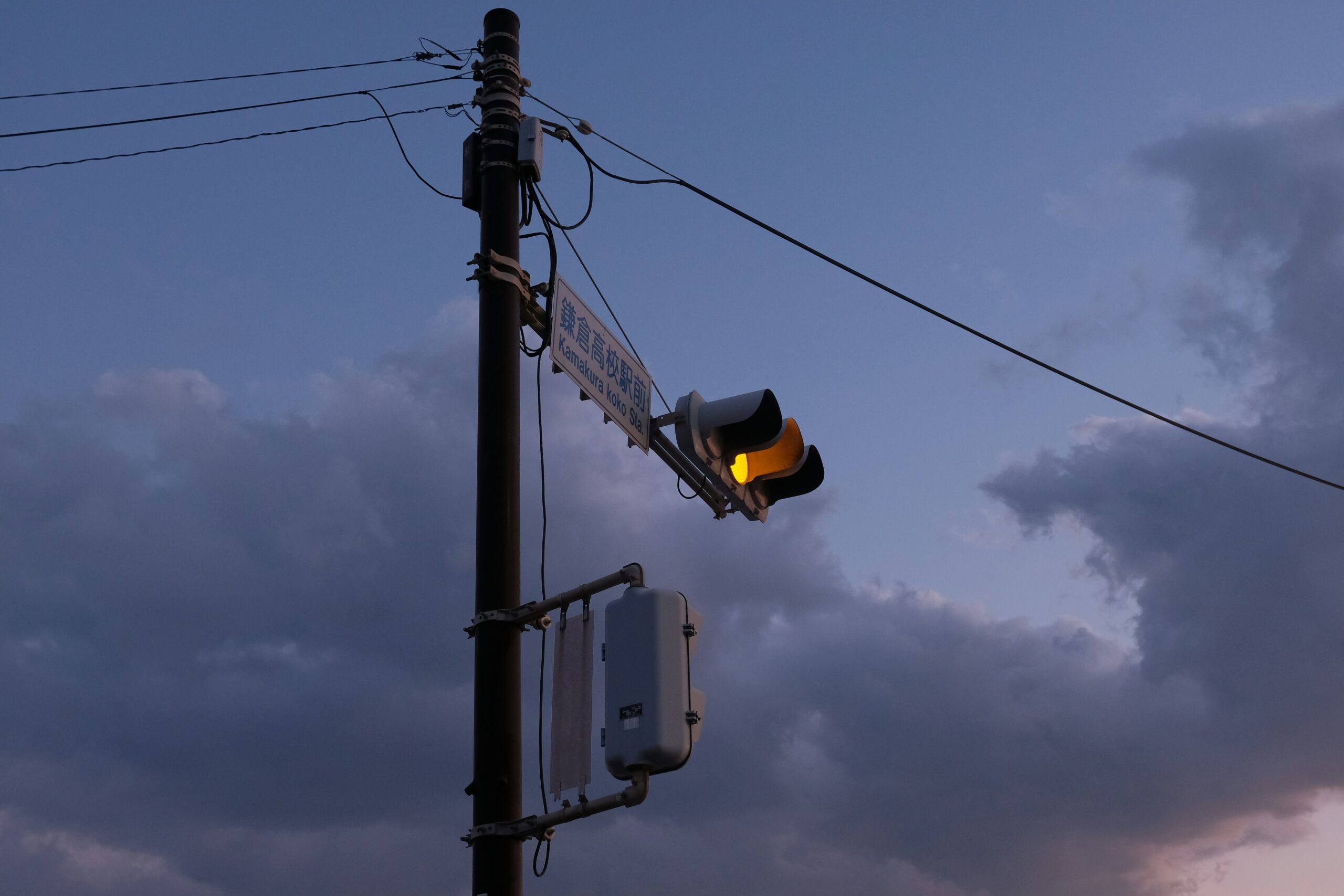
In other instances, your adrenaline might flow a little flow when randomly approached out of nowhere by an older man at somewhat of a well-known spot. But Minoru-san was just a nice guy. Truly. From what we could glean, he was 62 and had been living near Kamakura for 6 years. Prior to that, he’d spent his time in Nagano, growing up in the mountains. He wasn’t sure whether he preferred the mountains or the sea, but was assured in his love for nature.
He was eagerly learning English and I think he simply wanted to practice. I always come away from conversations like these reflecting on how the standard of bad English in foreign countries is usually very good and that these speakers just lack confidence, not proficiency. The standard is so much higher and it is such a privilege to travel a world where English can partially serve you anywhere. For now, my Japanese is actually bad, not the sneakily-very-good version of bad that many English-speaking Japanese will apologise to you about.
That being said, this was a rare moment where we could practice our Japanese and it felt great. Sentences were a broken blend of Japanese, English, and strong body language, but the message was clear, the stakes were low, and the opportunity was there to practice relevant conversation without pressure. He was patient, inquisitive, and not in a hurry. It was wonderful.
We discussed skiing, snowboarding, surfing, and then various pilgrimage walks around the country. He had completed the legendary 88 Temples pilgrimage of Shikoku. Over 38 days, he walked, stayed and worked in temples, and contemplated life. He said that it significantly improved his mental health. He said he was a monk, but I couldn’t tell whether that meant he was a monk, or is still a monk, or just that he was monk-like during pilgrimage? In any case, it was insightful conversation.
Before leaving to walk back to his home—a daily routine prescribed to him because of his bad knees—he shared with us how special this moment was to him. I think he meant it too. He expressed a shared sentiment, that the chance of that interaction occurring in this one life we have is impossibly rare and that we will never meet again; in that way, this was an extremely special moment. It truly was, and it made our day.