A Full-Circle Pilgrimage

Ise City. Depending on how you view it: the beginning, or the end—in our case—of a World Heritage pilgrimage. Or, for most Kumano Kodo pilgrims, a city they never set foot in at all. Although the dense cypress forest hiking is more sporadic, and the Mie prefecture lags behind the organised tourism engine centred in Tanabe (making accomodation and route planning more difficult), the Ise-ji holds many a jewel. I felt it was appropriate to finish our journey in Ise.
A three-hour train journey from Owase—not a town, but a city, too—albeit, one that makes you feel like you missed something along the way. The sense of loneliness there is profound and yet, it feels as though you’ve just not be invited to party. As if the vibrant heart of the city lies somewhere you’re yet to discover. It has to be, right? After all, the location is picturesque. Well-connected and well-resourced, surrounded by towering, lush mountains in all directions, barring the endless blue ocean which it also boasts unobstructed access to. It should be the heart of the region. Yet, it simply isn’t. Life here seems to have slowly faded away.
But yes, that three-hour train ride had us land in Ise. A city which caught us by surprise. Youth! Train stations once again where you could tap your IC card, rather than buy a paper ticket with cash. It was actually a little disappointing that we’d only spend very few hours here. It was already 7pm, with just one night at the surprisingly hospitable (and cheap!) Flycat Inn on the cards. Alas, it felt like the right ending to our adventure.
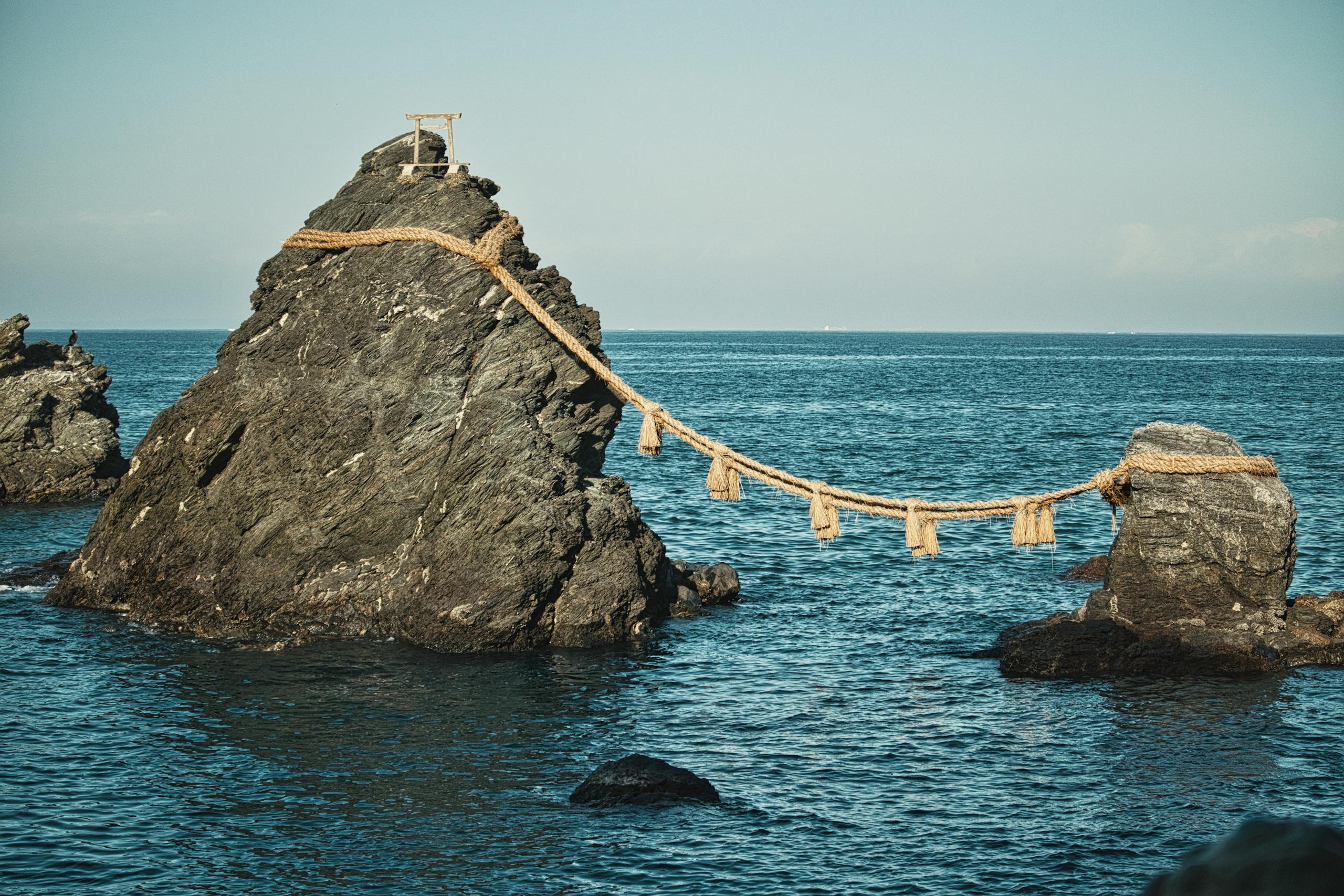
Ise is home to the Japan’s most sacred Shinto shrine, dubbed the Soul of Japan. It is quite a remarkable place. Shame we didn’t actually visit it…
It was only when we checked out, had breakfast, and wheeled a recently Takkyubin-shipped suitcase out onto the street that we realised the main shrine was over an hour trek away. Poor planning, yes. However, it was advertised that the shrine was only a 10min walk from main train station. Little did I know that there was an amazing centre-city shrine, alongside the shrine. Staring down the barrel of another three-hour commute, we opted for the not-necessarily-grand shrine. It was certainly grand enough for us though, I’d say.
When we turned a corner to face the main street, we realised the crowd of people ahead weren’t walking towards the train station. They were all headed to the shrine. The shrine that we hadn’t really given much thought, besides its logical ease. The mass movement was reminiscent of central Tokyo’s Meiji Jingu in peak tourism season. Yet, these were all locals. We just followed.
This wasn’t just our pilgrimage, but theirs too. A shared journey. Except that they were empowered with the cultural nuance, significance, and sensitivity of the time and place. We were just there to watch it all unfold, and feel a sense of completedness in our efforts.
Around us, all smiles. Children laughing. Families enjoying their Saturday morning outing. Was this commonplace or did today mark some special event? Not to my knowledge. Once inside the torii gate, the more reverent atmosphere becomes palpable though. This is undoubtedly a sacred space.
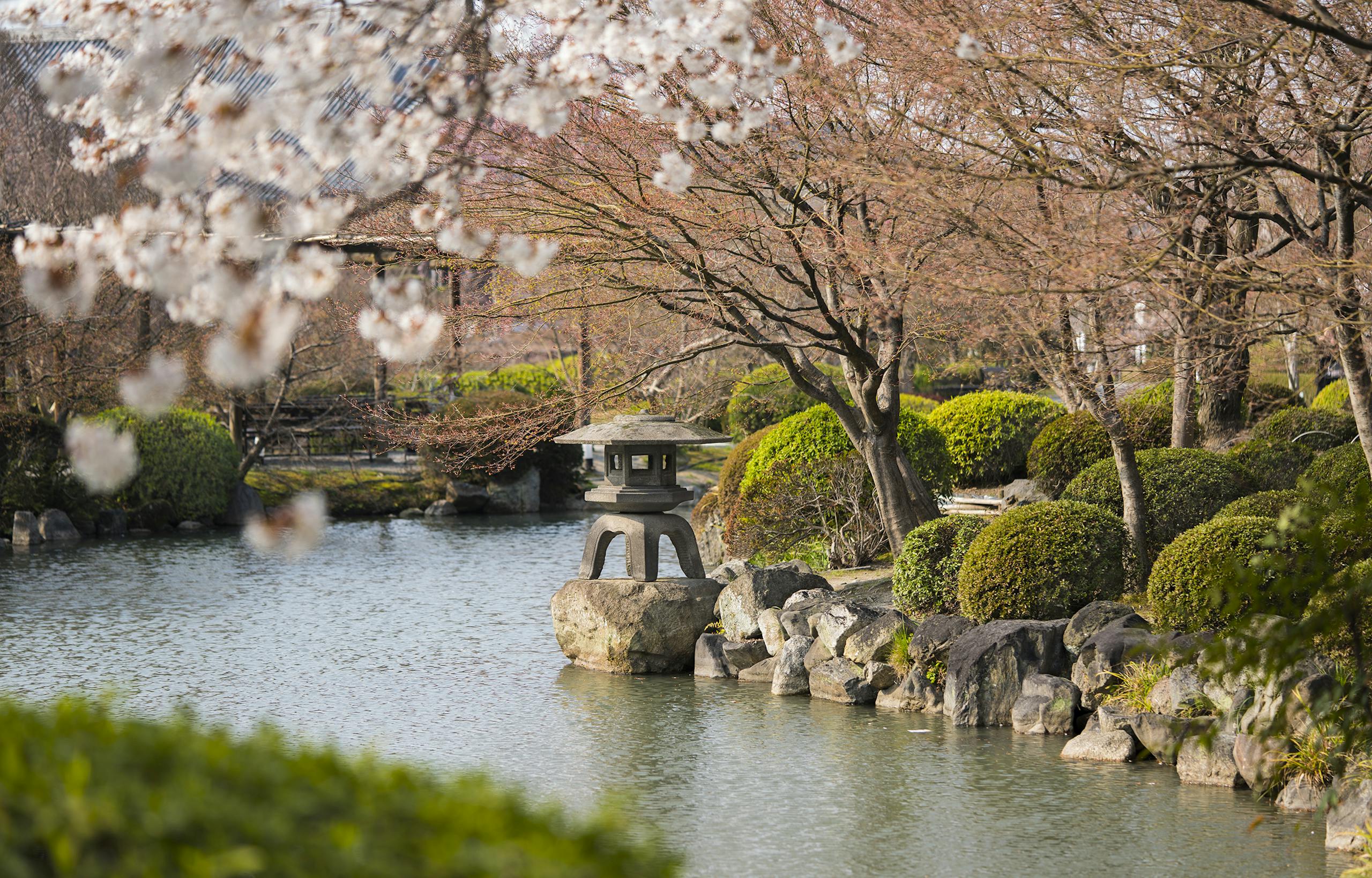
As an aside, something I really enjoy is that the most serene pockets of greenery and natural beauty throughout Japan always seem to be the same places where shrines dominate. In the most respectful, coexisting way. Not overbearing at all. The harmony with nature in this specific shrine feels particularly accentuated. Every structure sports the traditional—and beautiful—thatched roof design that gives you a cozy feeling inside somehow. The torii here stand out in their simplicity. Not red and towering. Understated. Wooden. Weathered a little. Of course, though, still demonstrating the meticulous craftsmanship, attention-to-detail, and care that is ubiquitous here. Old trees envelop the sacred space. The colour palette is a pleasingly earthy mix of light browns, forest greens, and dark, pebble greys.
Inside the main complex we watch silently as a Shinto priest leads a private ceremony for three smartly-dressed individuals. The priest seemed quite young. I don’t have the faintest clue as to the context of the ceremony, but it was very cool. All in the public eye, too.
This isn’t just a pilgrimage route that serves as an important historical testament, a cultural artefact, or a carefully curated attraction. Rather, it reflects directly on a living, breathing centrepiece of contemporary Japanese life; a cultural integration with deep roots, but also ever-growing branches. This isn’t some mystical, long-lost faith. It is something very real, very tangible, and very present in the lives of most everyday Japanese today.
For us, the pilgrimage had ended. Yet, the impact of faith will still be felt each and every day while we’re here. Coming to Ise reminded me that religion in Japan has both historical grandeur and charm, like that evident in Hongu or Nachi, but also practicality immense daily relevance. In both the mega-city of Tokyo and the nearly-abandoned Nakahechi town of Takahara, faith permeates everything. All in a likeable, accessible, and non-confrontational way.
Ultimately, our pilgrimage was imperfect, but perfect in that very way. Few things went exactly to plan, yet everything went to plan in the end. For me, Ise brought that understanding full-circle and tied off the Kumano Kodo for us with a satisfying little bow. I now know the appeal. Whether for the spiritual insight, the soulful people, or the stunning hiking, I’d do it all again in a heartbeat.