Contactless Food Hopping

Travelling in Japan, the food options are aplenty. Whilst I appreciate the unique experience, culinary art, and incredible seasonal ingredients that might come with dining kaiseki or omakase style, that hasn’t been in my budget for this trip. Fortunately, stretching each dollar on food is achievable here, in ways that feel much different to the West.
As you settle in somewhere, novelty eventually wears off. You begin to see that the exciting and unfamiliar is commonplace. You realise that you can find amazing ramen everywhere. After a while, particularly if you’re travelling on a budget, your priority might shift from looking to try every type of food, to instead just once again searching for value. From what I’ve found, Japanese “fast” food provides this quality in spades. On the surface, you might feel inclined to steer away from the chain franchises, particularly if you’re in search of an authentic experience. Yet, large-scale conveyer belt brands like Sushiro and Hama Sushi consistently have lunchtime lines extending out the door. After tonight, I can understand why.
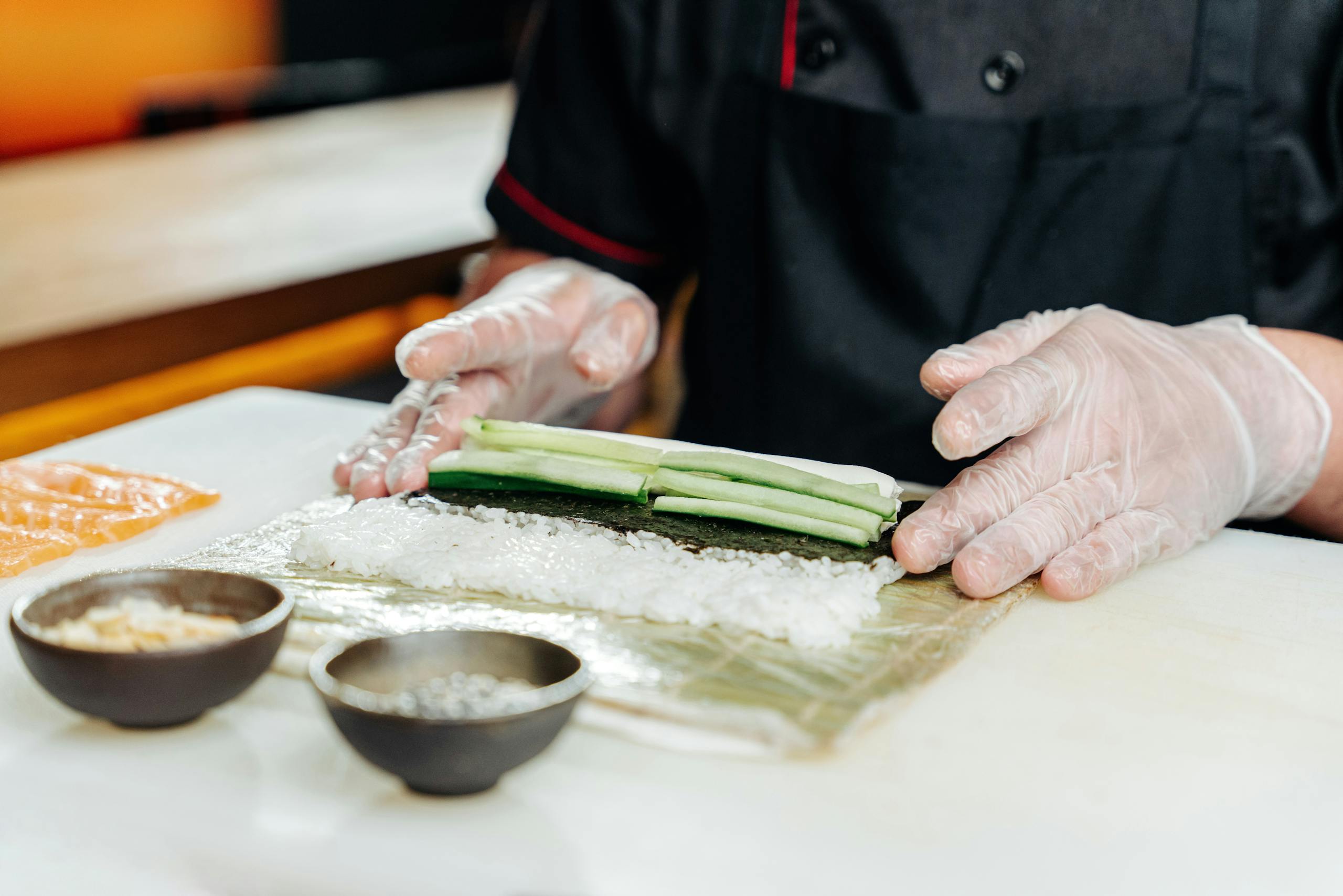
Finally, I ate train sushi for the first time whilst in Japan. It was simple and absolutely brilliant. I walked in, grabbed a ticket with an assigned seating booth, and sat down. Selected English as my language and ordered within five minutes on an iPad. Almost instantly, my food arrived on a colour-coded plate, accompanied by a notification. For less than $10, I ate six nigiri, each one featuring a different piece of local seafood. Also, two gunkan featuring beautiful, deep red tuna sashimi—not the grey canned fish you’d find inside Australian sushi—plus an entire bowl of topped udon noodles. Mary dislikes seafood, but luckily for her, we were out of the restaurant within half an hour. Paying runs via a QR code. You don’t speak to a single staff member. You can watch them working frantically out the back though.
Is this fast food? I’d argue that it should almost be the prototype. I walk away without feeling any guilt. I get the impression I would happily have eaten there for three times the price, and could eat there every day. I just enjoy the experience far more than walking into McDonald’s. Could that just be novelty? Perhaps. But tangibly, the exists a chasmic difference between thin, water-infused, defrosted burger patties with a side of oily chips, and fresh sashimi on rice. The price was the same. The speed of delivery, too. Plus, I could use the complimentary matcha powder and embedded hot water tap in my table to have as much green tea as my heart desired while I waited.
Tonight, we had no plans, so we just ended up hopping around through a few of these contactless fast food chains. Deciding on a restaurant to spend your night sitting down at can be brilliant, but sometimes it is exhausting, and involves compromise. We wanted to be spontaneous, and we wanted to eat different things, so we did exactly that, and it was great. Why pick one spot for dinner that doesn’t work for both of you when you can sample all of your ideal options in less than 90mins? It makes for a fun night.
Speaking of Japanese chains, we plan on spending our final night here eating at Torikizoku once more. Glamorous? Not exactly. But great-tasting yakitori with a menu featuring only ¥390 items is value. There is almost always a queue when we’ve visited. Any night. Any city. The place has naturally signified so many meaningful points on our three-month-long journey so far precisely because it is so easy to return to. The Japanese nail fast food, across several different domains, including many I didn’t bring up. It won’t happen, but I’d love if we could bring these chains back home with us.
Ultimately, I think the options are always good here. If you want the authentic and homely, a third generation, family-run udon shop with tiny countertop seating has you covered. But if you want convenience, and you want to focus on sharing time with the people you’re eating with, there will be something tasty and cheap for you around nearly every corner, too.